An index fund is a mutual fund or exchange-traded fund (ETF) that tries to match a market index, such as the S&P 500, instead of trying to beat it. For a beginner, that means one purchase gives you a small piece of hundreds or thousands of companies, usually for a low annual fee. To start, you open an account, pick a broad fund with a low expense ratio, and add money on a schedule. This guide walks through each step.
TL;DR
- An index fund holds all, or a representative sample, of the securities in an index, so you own a slice of the whole market segment.
- The “index fund vs. ETF” question is mostly about wrapper, not strategy: both can track the same index, but ETFs trade all day like stocks, while mutual funds price once a day.
- Compare the index being tracked, the expense ratio, and any minimum investment before you buy.
- Invest a fixed amount on a schedule, hold through downturns, and put the account (IRA or 401(k)) first, the fund second.
Table of Contents
- What an index fund actually is
- Index fund vs. ETF: what’s the real difference?
- Why beginners like index funds
- The risks nobody should skip
- How to compare index funds before you buy
- How to start investing in index funds
- Staying consistent when markets get rough
- Our perspective
- Find the money to start
- FAQ
- Sources
What an index fund actually is
An index is a list of securities that represents part of a market. The SEC’s investor education arm defines an index fund as a mutual fund or ETF that seeks to track an index like the S&P 500, the Russell 2000, or the Wilshire 5000. It generally holds all of the index’s securities, or a representative sample, and trades relatively rarely because it is not trying to outguess the market.
That last point is what “passive” means. A passive fund aims to deliver roughly the return of its index before fees. There is no manager picking winners, so there is less trading, lower transaction costs, and often lower expenses than with an actively managed fund.
In practice, you are buying a bundle. If the fund tracks a broad U.S. stock index, a single share represents a small ownership interest in many companies at once. If one company stumbles, it is a small part of the whole.
How an index weights its companies
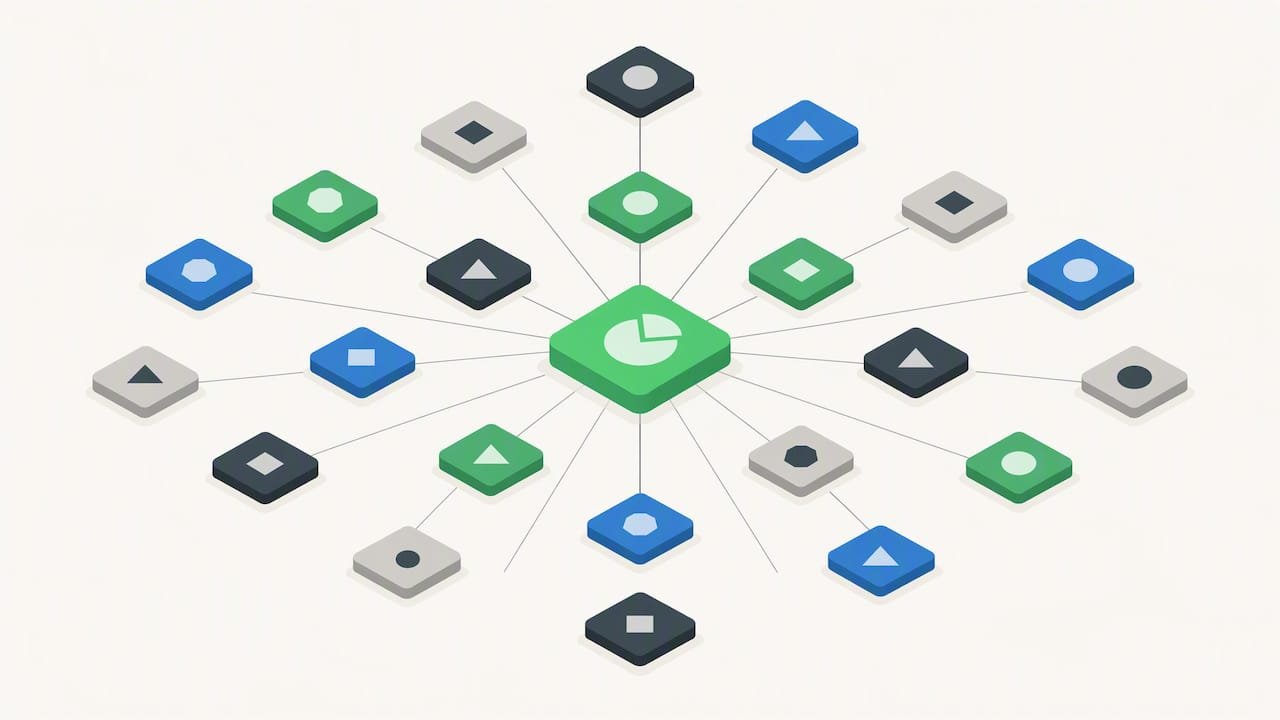
Most popular stock indexes are market-cap weighted: larger companies get a bigger weight based on total market value. So when you buy an S&P 500 fund, your biggest holdings are the biggest companies. A few indexes work differently. The Dow Jones Industrial Average, for example, weights by share price. Knowing this helps you understand what you actually own.
Index fund vs. ETF: what’s the real difference?
This is the most common point of confusion, and the phrase itself is slightly misleading. “Index fund” describes a strategy (tracking an index). “ETF” and “mutual fund” describe the structure that holds it. The SEC notes that index-based mutual funds and ETFs both seek returns that closely correspond to an underlying index. So an S&P 500 index fund can come as either one.
The practical differences:
| Index mutual fund | Index ETF | |
|---|---|---|
| How it trades | Bought and sold at the price set once a day after the market closes | Bought and sold throughout the trading day like a stock |
| Price you get | Net asset value (NAV) | Market price, which may differ from NAV |
| Minimum to start | Some funds set a minimum; check the prospectus | Typically the price of one share, and many brokers allow fractional shares |
| Automatic investing | Often easy to schedule by dollar amount | Depends on your broker |
If you plan to invest a set dollar amount every payday, an index mutual fund (or an ETF at a broker that supports automatic fractional purchases) is convenient. If you like choosing your purchase time or want a low entry price, an ETF works well. Neither is automatically better. What matters more is the index, the cost, and whether you actually keep investing.
One caution from FINRA: don’t choose an ETF solely because a broker advertises commission-free trading. Other costs can still apply, so read the prospectus for objectives, holdings, risks, fees, and expenses.
Why beginners like index funds
There are four practical reasons.
- Built-in diversification. One fund can spread your money across many companies. A major brokerage’s guide says index funds can offer diversification, cost effectiveness, and potential tax efficiency.
- Low cost. Because managers generally don’t need the same research resources as active managers, fees can be lower. The Investment Company Institute reported that in 2025 the average expense ratio for index equity ETFs was 0.14%, versus 0.40% for equity mutual funds overall.
- Tax friendliness. Index funds generally trade less, so they usually distribute fewer taxable capital gains than actively managed funds.
- Simplicity. You don’t need to research individual stocks. You choose an index and a fund, then keep adding money.
Why fees matter more than they look
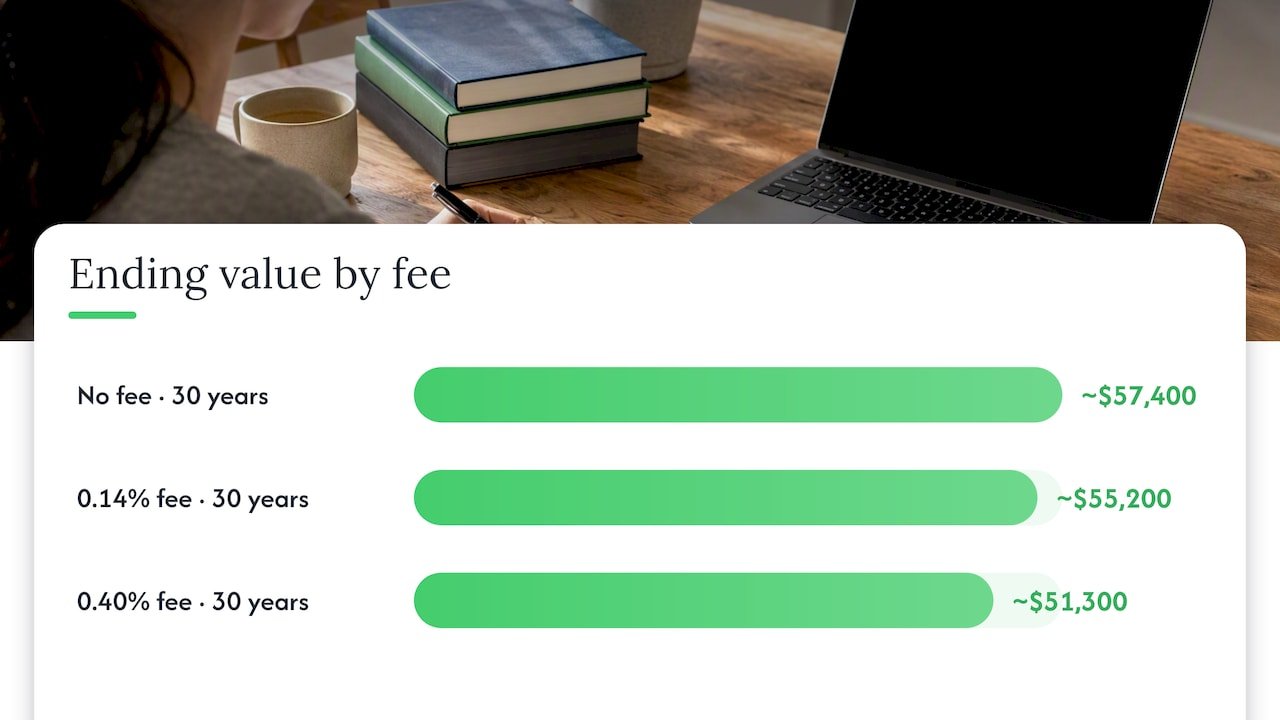
The expense ratio is the yearly fee, shown as a percentage of what you have invested. It comes out of the fund’s returns automatically, so you never see a bill. Here is a simple illustration, using our own arithmetic and not a prediction: if $10,000 grew 6% a year for 30 years with no fees, it would reach about $57,400. With a 0.14% fee, it ends near $55,200. With a 0.40% fee, it ends near $51,300. The gap is real money, and it comes from a fee difference that looks tiny on paper.
The risks nobody should skip
Index funds are simple, not risk-free. The SEC lists several risks: the risks of the securities the fund tracks, less flexibility to respond to declines, tracking error, and underperformance from fees and trading costs.
In plain terms:
- Market risk. When the part of the market your fund tracks falls, your fund falls too. One large brokerage warns that index investing does not aim to outperform or necessarily reduce losses in a downturn.
- Concentration. Owning one index fund does not automatically mean you are spread across asset classes or regions. A U.S. stock fund holds U.S. stocks only.
- Tracking error. A fund can lag its index slightly because of fees, taxes, and trading costs.
- Not all index funds are cheap. The SEC points out that not every index fund costs less than every active fund, so check each one.
Because stock funds can drop sharply, money you will need within a few years (an emergency fund, a house down payment) generally doesn’t belong in them. Our guide on how much house you can afford is a good place to plan that kind of goal separately.
How to compare index funds before you buy
Two funds with similar names can behave differently. The SEC warns that funds tracking seemingly similar benchmarks can differ substantially, for example by holding every company in the index or only a representative sample. Use this checklist:
- The index. Is it a broad U.S. stock index, a total market index, an international index, or a bond index? A fund’s label isn’t enough, so read what the index includes.
- The expense ratio. Lower is better when everything else is equal. FINRA says fees and trading costs vary widely, and its Fund Analyzer can compare up to three products over a chosen time period.
- How it holds the index. Full replication or a sample? Check the prospectus.
- Minimum investment. Some mutual funds require a minimum; many ETFs only require the price of a share.
- Fit with your goals. Read the prospectus and the latest shareholder report, as the SEC recommends.
What a simple beginner lineup can look like
Most beginner portfolios are built from a few broad building blocks, not dozens of funds:
- A broad U.S. stock index fund (large companies, or the total U.S. market).
- Optionally, an international stock index fund for geographic spread.
- Optionally, a bond index fund for stability, especially as your goal date gets closer.
How much goes into each depends on your timeline and comfort with swings, and a licensed adviser can tailor that to you. If you want ideas for how people mix a few funds, these sector allocation starter plans show how 3 to 5 ETFs can be combined.
How to start investing in index funds
Here is the process most brokerages follow, summarized from a large fund company’s step-by-step beginner guide.
- Choose the right account. Open an IRA or a regular brokerage account. If your employer offers a 401(k), check its contribution limits and Roth option first, particularly if there is a match.
- Decide between Roth and traditional. Our Roth vs. traditional IRA break-even test helps you decide, and three checks before you open a Roth IRA covers eligibility.
- Compare brokers. Look at available funds, fees, and how easy the platform is to use.
- Fund the account. Transfer cash from your bank.
- Review the fund. Check its index, objective, performance history, and expense ratio.
- Buy shares. Read the prospectus first, then place the order.
- Automate. Set a recurring deposit and, if available, a recurring purchase.
The account type matters because it decides how the money is taxed. The fund decides what it is invested in. Beginners often spend weeks choosing a fund and a few minutes on the account, when it should be the other way around.
Staying consistent when markets get rough
The hard part of index investing is behavior, not selection. Prices will fall at times, and a falling balance feels bad even when your plan is sound.
Invest on a schedule. Dollar-cost averaging means investing equal amounts at regular intervals regardless of market ups and downs. You buy more shares when prices are low and fewer when they are high. It doesn’t guarantee a profit or prevent losses, but it removes the guesswork about timing and fits naturally with a paycheck.
Decide your rules in advance. Write down why you are investing, for what goal, and over how long. When the market drops, reread it before touching anything.
Avoid these common mistakes:
- Picking a fund on last year’s performance alone.
- Paying a high expense ratio for a fund that tracks the same index as a cheaper one.
- Putting money you need soon into stock funds.
- Stopping contributions during downturns.
- Owning five overlapping funds and believing that is diversification.
- Skipping an emergency fund, then selling investments at a bad time to cover a surprise bill. Our budgeting habits that work guide can help you free up the money to invest regularly.
Our perspective
We see the same pattern with readers who feel overwhelmed by investing. They spend most of their energy on the question “which fund is best?” and very little on whether they can invest every month without fail. A plain, broad, low-cost index fund that you keep buying will usually serve a beginner better than a perfect pick you never get around to purchasing.
Our advice is to simplify. Get the account right, choose one broad fund you understand, automate the deposit, and look at it less often than you want to. We aren’t licensed financial planners, and this isn’t personalized advice. If your situation involves taxes, a large windfall, or complicated goals, a fee-only fiduciary adviser is the right person to talk to.
— Win Personal Finance
Find the money to start
Not sure where the first $50 or $100 a month will come from? We keep a list of the best free financial wellness tools for tracking spending, building a budget, and watching your credit. Pair that with our side hustle plan if you want to raise your income and invest the difference.
FAQ
What is the best index fund for a beginner?
There isn’t one best fund for everyone. A low-cost fund tracking a broad U.S. stock index is a common starting point because it is diversified and simple. Compare the index, expense ratio, and minimum, and read the prospectus before buying.
Is an index fund or an ETF better?
Neither wins outright, because many ETFs are index funds. The difference is how they trade: ETFs trade all day at market prices, while mutual funds are priced once daily. Pick the one that suits how you plan to invest and what your broker offers.
How much money do I need to start?
It depends on the fund. Some mutual funds have a minimum, while many ETFs only need the price of one share, and some brokers let you buy fractions of a share. Check the fund’s prospectus and your broker’s rules for the current numbers.
Can I lose money in an index fund?
Yes. If the market your fund tracks declines, your fund declines with it. Index funds spread risk across many holdings, but they don’t remove market risk. That is why they suit long-term goals more than short-term needs.
Sources
- Investor Bulletin: Index Funds (Investor.gov)
- Passive Fund or Passively Managed Fund (Investor.gov)
- Index Funds (Investor.gov)
- Dollar Cost Averaging (Investor.gov)
- Mutual Funds and ETFs (SEC)
- Exchange-Traded Funds and Products (FINRA)
- Mutual Fund and ETF Fees Remained Near Historic Lows in 2025 (ICI)
- Index Funds: How to Invest (Vanguard)
- Index funds and ETFs: Investing in Index Funds (Charles Schwab)
- What is an index fund and how does it work? (Fidelity)