

The best passive income ideas for most beginners are the dull ones: a high-yield savings account, a low-cost index fund, and, once those are running, a digital product or a small rental. Almost none of it is truly passive at the start. Nearly every option asks for money, time or both up front, and then pays you for the work later.
This guide ranks the ideas by how much effort they need, what they cost to start, what can go wrong, and how the IRS treats the income. We wrote it for readers who want to build passive income without falling for get-rich-quick pitches.
TL;DR
- Passive income is money that arrives without daily work, but most streams need real upfront effort or capital.
- Start with the safest tier: savings accounts and diversified index funds. Then add one stream that fits your skills.
- Chasing the highest dividend yield or the flashiest online business is the most common beginner mistake.
- Rental income and REIT dividends have their own tax rules, so check them before you count the money as yours.
- Fix your budget and emergency cushion first. A stream built on borrowed money or a shaky budget usually does not last.
Table of Contents
- What passive income really means
- Before you start: three checks
- Passive income ideas at a glance
- Capital-based ideas: the safest starting tier
- Work-first ideas: build once, earn for a while
- Hybrid ideas: powerful, but rarely hands-off
- Which idea fits you?
- Taxes and traps to know
- Our perspective
- Put a plan around it
- A simple 90-day starting plan
- FAQ
- Sources
What passive income really means
Passive income is money you earn without trading hours for it. It is not tied to an hourly wage or a salary. Examples include interest, rental cash flow and dividends. Another bank’s education page makes the caveat that some upfront effort or oversight is often involved, and we agree.
Think of it as a spectrum:
- Capital-based: you put money to work (savings, bonds, funds, dividend stocks). Effort is low after setup, but you need cash first.
- Work-first: you build an asset (an ebook, a course, a template shop, a blog) and it keeps selling. Cash is cheap, but your time is not.
- Hybrid: rentals and small businesses. They can pay well, but they often need steady management.
Financial advisor Marguerita Cheng makes a point we repeat to readers often: passive income is a tool for long-term stability, not a get-rich-quick scheme. Her suggestion is to start with one stream that fits your current finances and skills, and expand only once it proves reliable.
Before you start: three checks
Passive income works best on a stable base. Run through these first.
- Know your monthly numbers. If you cannot say what comes in and goes out, you cannot tell how much to invest. Our guide to smart budgeting habits is a good place to begin.
- Hold a cash cushion. Money you may need within a year or two belongs in an insured deposit account, not in stocks or a business that has not paid you yet.
- Clear high-interest debt. If a credit card charges you far more than any passive stream is likely to earn, paying it off is the best return available. A simple financial management plan helps you put the steps in order.
Also grab the retirement basics. If your employer matches contributions, that is often the closest thing to free money. See our notes on 401(k) contribution limits and on choosing between a Roth and a traditional IRA.
Passive income ideas at a glance
| Idea | Money needed to start | Effort after setup | Main risk |
|---|---|---|---|
| High-yield savings, CDs, money market accounts | Low to moderate | Very low | Rates can fall |
| Index funds and ETFs | Low | Very low | Prices fall in downturns |
| Dividend stocks | Moderate | Low | Cuts to dividends, concentration |
| REITs | Low to moderate | Low | Price swings, tax treatment |
| Digital products (ebooks, templates, courses) | Low | Low to moderate | Slow or no sales |
| Blog or YouTube channel | Low | Moderate, long ramp-up | Takes months or years to earn |
| Rental property | High | Moderate to high | Vacancies, repairs, tenants |
Capital-based ideas: the safest starting tier
High-yield savings, CDs and money market accounts
This is the simplest stream: park cash at an FDIC-insured bank and collect interest. The FDIC insures deposits up to $250,000 per depositor, per insured bank, for each ownership category. It covers savings, checking, CDs and money market deposit accounts.
Two cautions. First, the insurance does not cover stocks, bonds, mutual funds or annuities, even if you buy them through a bank. Second, a brokerage cash balance is not automatically insured the same way, so confirm how it is held. The FDIC’s BankFind tool lets you check that an institution is insured.
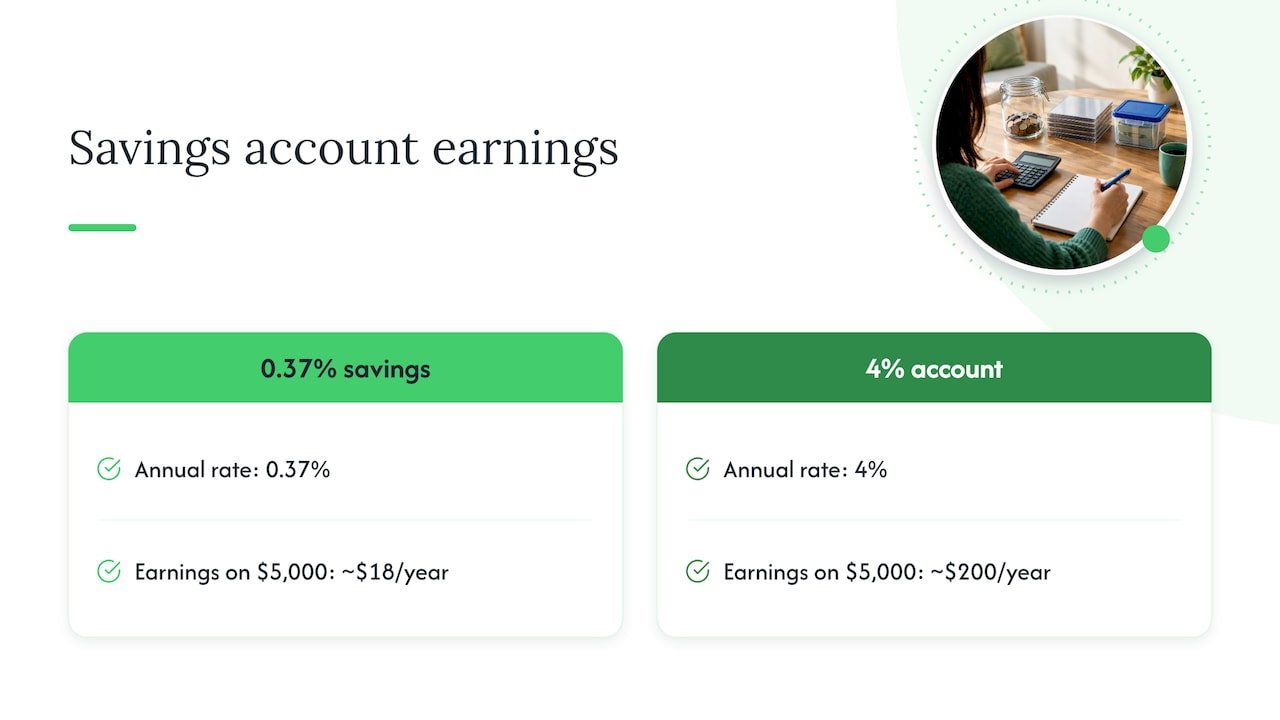
Rates matter a lot here. The FDIC’s national average for regular savings accounts was 0.37% from mid-September to mid-October 2026, so an online bank paying well above that can multiply your interest several times over. Rates move, so compare before you open an account.
A worked example: on $5,000, a 0.37% account earns about $18 a year. A 4% account earns about $200. The effort is identical, and the second one only takes a ten-minute comparison.
Interest is taxed as ordinary income, so it will show up on your return.
Index funds and ETFs
A broad index fund owns hundreds or thousands of companies in a single purchase. You get dividends and growth without picking winners. For beginners, this is usually the most practical long-term stream because costs are low and you can automate it: set a transfer each payday and leave it alone.
The income here is mostly slow growth rather than a monthly check. If you want a paycheck-style payout, you can sell small amounts later, but that is a decision for retirement planning rather than a beginner step.
If you are choosing where to hold these funds, a retirement account can matter as much as the fund itself. Our Roth vs. traditional IRA break-even test walks through the tradeoff.
Dividend stocks
Dividend stocks pay a share of profits to shareholders, often quarterly. The trap for beginners is picking the highest yield on a screen. SEC-filed research on equity income argues that looking at dividend growth and total shareholder yield is a more consistent route than chasing the highest yield, which can leave you with unintended sector concentration and weaker companies.
Practical rules:
- Spread across many companies and sectors, or use a dividend-focused fund.
- Treat an unusually high yield as a warning, not a bargain.
- Know that dividends are taxable. Qualified dividends get lower rates than ordinary income, but you need to meet holding-period rules.
REITs
Real estate investment trusts let you earn real estate income without buying a building. Congress created them in 1960 so that individual investors could invest in large-scale, income-producing real estate. To keep their tax status, REITs must pay out at least 90% of taxable income to shareholders, which is why their yields look generous.
The tradeoff is tax. REIT dividends are often taxed as ordinary income rather than at the lower qualified-dividend rates, per the same SEC bulletin. That makes REITs a common fit for tax-advantaged accounts such as an IRA, where the difference matters less. Prices also swing, so they are not a savings substitute.
Work-first ideas: build once, earn for a while
These ideas trade your time for future income. Be honest with yourself about the first few months: you will likely earn little or nothing while you build.
Digital products
Ebooks, printable planners, spreadsheet templates, stock photos and design files all fit here. You make the product once and sell it repeatedly on a marketplace or your own site. The best ones solve a narrow problem you already understand, such as a budget spreadsheet for freelancers or a meal-plan template.
How to test it cheaply:
- Pick one problem you have solved yourself.
- Build the smallest useful version.
- List it at a low price and see whether anyone buys.
- Improve it based on reviews and questions before making a second product.
Watch the upkeep. Products need updates, customer questions and marketing, so the income is semi-passive at best.
Blogs and YouTube channels
Content can earn through ads, affiliate links and sponsorships, and a good article keeps drawing readers for years. We run an affiliate blog ourselves, so we can tell you plainly: it takes sustained effort before it pays. Expect months of publishing before meaningful traffic. If you like writing or teaching, it can become a durable asset, but it is not a shortcut.
If you want to see what online earning options look like, our list of websites to make money online covers where beginners can start.
Courses and memberships
Once you have real expertise and an audience, a course can sell repeatedly. Without an audience, it rarely does. Build the audience first with free content, then sell. If you are not sure you have a skill people will pay for, start with a side hustle where you get paid while learning, then turn what you learn into a product.
Hybrid ideas: powerful, but rarely hands-off
Rental property
Rent can be a strong income source, but it is the idea most often mislabeled as passive. You need a down payment, a reserve for repairs, insurance, and either your time or a property manager’s fee. Vacancies and big repairs can wipe out a year of profit.
The tax rules also surprise people. According to IRS instructions, many rental activities are passive by default regardless of how involved you are, unless you qualify as a real estate professional. The same document notes that merely studying financial reports as an investor does not count as material participation. In practice, passive losses can usually offset only passive income, so you may not be able to use a rental loss against your salary. These instructions are from 2012, so talk with a tax professional or check the current IRS publications before you rely on the details.
If you are weighing a purchase, our guide on how much house you can afford is a sensible first step. For a lower-commitment way into real estate, see REITs above.
Which idea fits you?
- You have little time and some savings: start with a high-yield savings account and automatic index fund contributions.
- You have time and a skill but little cash: try one digital product or a content channel, and set a six-month review date.
- You have a large down payment and enjoy hands-on work: rental property may fit, but model repairs and vacancies first.
- You want diversification: layer streams slowly, one at a time, as Cheng suggests.
Taxes and traps to know
- Nonresident aliens: if you are not a U.S. citizen or resident for tax purposes, interest, dividends, rents and royalties from U.S. sources are generally subject to a flat 30% rate unless a treaty reduces it.
- Self-employment income: if you sell products or run a blog as a business, the IRS treats it as a business when your main purpose is income or profit, and it is reported on Schedule C.
- Guaranteed returns: any pitch promising high income with no risk or effort should make you stop. Real streams have a cost, a risk or a delay.
- Borrowed money: do not borrow to invest in a stream that has not proven itself.
Tax rules change, so confirm current rates and limits on IRS.gov or with a CPA or enrolled agent before making a large decision.
Our perspective
We get a lot of messages from readers who feel behind and want a fast fix. Here is what we tell them. The first stream you build should be the dullest one you can stand: automatic savings into an insured account, then automatic contributions to a diversified fund. That is not exciting, but it is the one most likely to still be working in ten years.
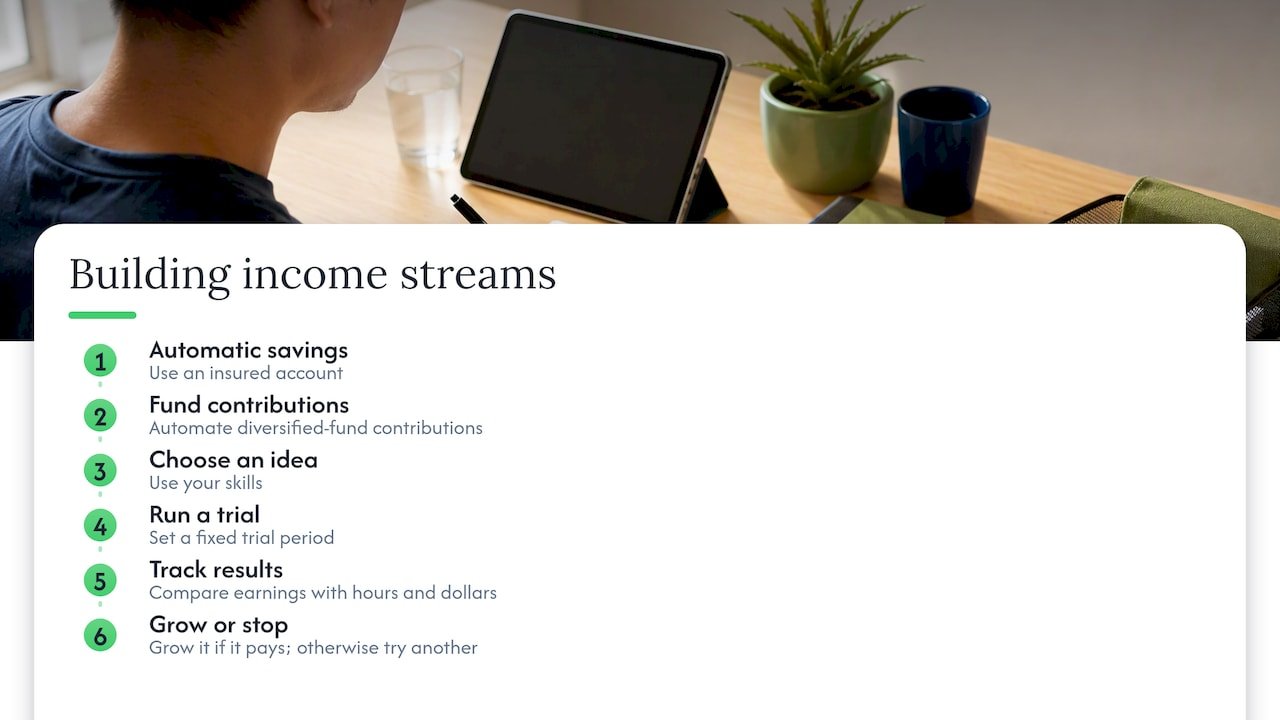
Only after that do we suggest adding something that uses your skills. Choose one idea, give it a fixed trial period, and track what it earns against what it costs you in hours and dollars. If it pays, grow it. If not, stop and try another without guilt.
We also think the word passive does more harm than good. Treat these ideas as income with low maintenance, not no maintenance, and you will plan better and be disappointed less.
— Win Personal Finance
Put a plan around it
Passive income is easier to build when your budget, goals and tools are in place. Our best free financial wellness tools guide shows how to track spending and savings without paying for software, and the rest of our personal finance guides walk you through budgeting, debt and income step by step.
A simple 90-day starting plan
- Days 1 to 14: list your income and expenses, and set an emergency savings target.
- Days 15 to 30: open an insured high-yield account and automate a weekly or monthly transfer.
- Days 31 to 60: open an investing account (an IRA or employer plan if you qualify) and set up an automatic index fund purchase.
- Days 61 to 90: choose one work-first idea, build the smallest version, and publish or list it.
At day 90, write down what you have earned, what you have spent, and what you learned. That review tells you whether to expand.
FAQ
How much money do I need to start earning passive income?
You can start with very little. Many savings accounts and brokerages have no minimum, and you can invest small amounts regularly. Work-first ideas like a digital product cost mostly time. Be realistic about the returns, though: small balances produce small income, so the habit matters more than the first amount.
Is passive income really passive?
Usually not at first. Even rentals and online businesses need upfront work, and many need ongoing management. The most hands-off options are insured deposits and index funds. The IRS also classifies many rentals as passive for tax purposes even when you are quite involved, so the tax label and the effort are different things.
What is the best passive income idea for beginners?
For most people it is a high-yield savings account plus automatic index fund investing. Both are low-cost, easy to set up and do not need special skills. After they are running, add one stream that matches your skills, such as a digital product.
Do I pay taxes on passive income?
Yes, in most cases. Interest is taxed as ordinary income, dividends are either qualified or ordinary, and REIT dividends are often taxed as ordinary income. Rental income and self-employment income have their own reporting rules. A tax professional can tell you how your situation works.
Sources
- SoFi: passive income ideas
- U.S. Bank: passive income ideas
- Investopedia: passive income
- FDIC: Deposit Insurance At A Glance
- FDIC: Deposit insurance at a glance, covered and non-covered products
- NerdWallet: average bank interest rates
- SEC: Equity Income Investing, Beyond Dividend Yield
- SEC: Investor Bulletin on REITs
- IRS: 2012 Instructions for Schedule C
- IRS: Taxation of nonresident aliens




[…] you want to explore this path, our guide to passive income ideas for beginners walks through what takes effort up front and what truly runs on its […]