
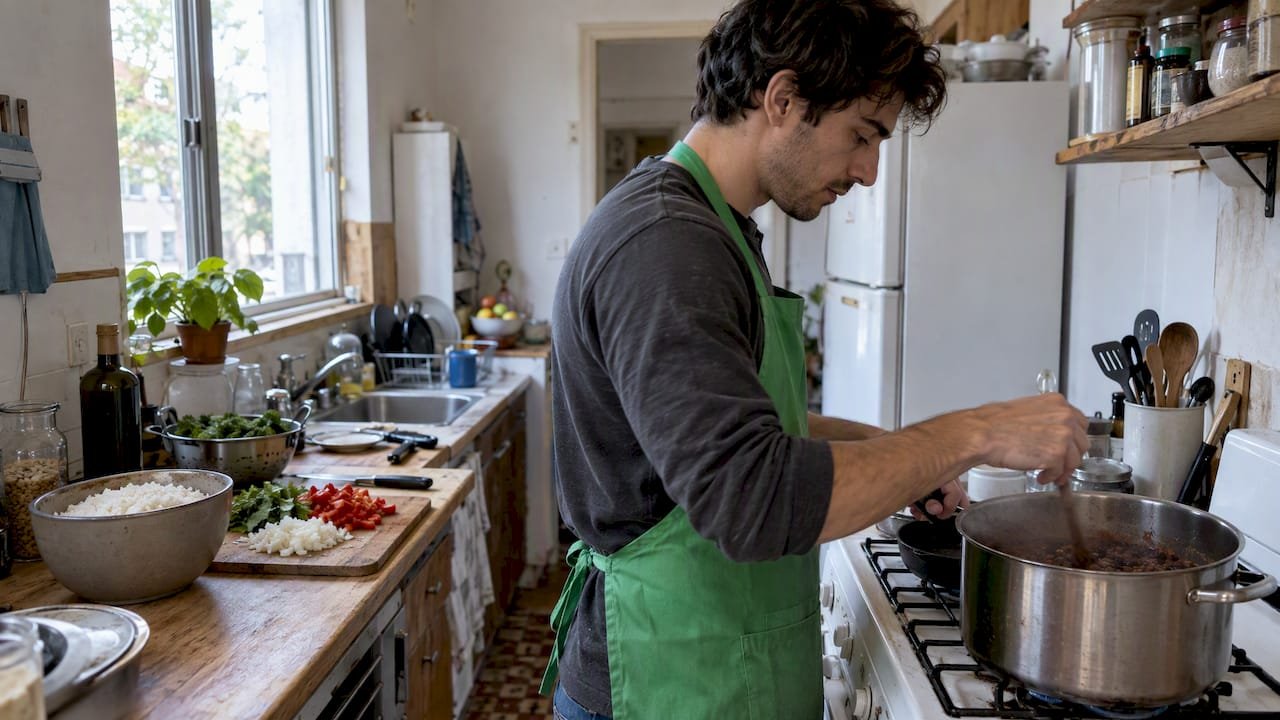
Budget meal planning comes down to four steps: decide what you will eat before you shop, build the plan from what you already own and what is on sale, buy only what the plan needs, and cook so that nothing gets thrown out. Do that for a few weeks and your grocery bill becomes something you control instead of something that surprises you. This guide walks through the system, gives you real cost benchmarks to aim for, and includes a sample week you can copy.
TL;DR
- Set a weekly grocery target first. The USDA’s Low-Cost plan is a useful benchmark, and one-person households should add 20% to it.
- Plan around your pantry, freezer and the store’s weekly sales, not around recipes you happen to want.
- Cook one protein and one starch in bulk, then turn them into three or four different meals.
- Use unit prices and a written list, and never shop hungry.
- Expect a few misses at the start. Adjust the next week’s list instead of quitting.
Table of Contents
- What a realistic grocery budget looks like
- Why planning saves money in the first place
- Step 1: Plan around what you already have
- Step 2: Shop with a list and a method
- Step 3: Prepare once, eat several times
- A sample week of budget dinners
- Build the weekly routine
- Our perspective: treat food as the easiest budget line to win
- Where to put the money you save
- Free help from official sources
- Keep going with Win Personal Finance
- FAQ
- Sources
What a realistic grocery budget looks like
Before you cut anything, you need a number. The USDA publishes monthly cost-of-food reports with four plans at rising price levels: Thrifty, Low-Cost, Moderate-Cost and Liberal. They are designed to show how a healthy diet can be achieved at various costs.
For the Low-Cost plan, the USDA’s latest figures put the weekly cost at $73.30 for a man aged 20 to 50 and $63.80 for a woman aged 20 to 50. Those numbers assume a four-person household. The USDA’s guidance for smaller households is to add 20% for a single person, because buying for one is less efficient.
Here is what that works out to, using our own arithmetic on the USDA figures:
| Household | Weekly Low-Cost benchmark | Approximate monthly |
|---|---|---|
| One man, 20 to 50 | about $88 | about $380 |
| One woman, 20 to 50 | about $77 | about $332 |
Treat these as ceilings for a healthy, balanced diet, not as goals to beat at any cost. If your current spending is well above them, you have room to save. If you are already below, you probably do not need to cut more. You may just need a steadier routine.
Your own number depends on where you live, whether you cook for kids and any dietary needs. Start with your last month of grocery receipts, find the average week, then aim to lower it by 10% to 15%. A target you can hit beats an extreme one you abandon by week two.
Why planning saves money in the first place
There are two forces working against your grocery budget: price and waste. Planning attacks both.
On waste, the USDA says the average American family of four loses $1,500 a year to uneaten food. That is money you spent to throw away. A plan that matches purchases to actual meals closes much of that gap.
On price, convenience is expensive. USDA researchers note that households respond to higher costs by cooking more at home, and that real food-at-home spending rose 1.8% in 2024 as price inflation eased. Eating out and heavily prepared foods cost more per serving than basic ingredients, though basic ingredients ask for more of your time.
Mayo Clinic Press frames the whole approach as plan, purchase, prepare. We use the same three phases below.
Step 1: Plan around what you already have
Most people plan backward. They choose meals they feel like eating, then buy everything. To save money, flip it.
- Shop your kitchen first. Check the fridge, freezer and pantry. Write down the proteins, grains, canned goods and vegetables you already own. An Allrecipes writer who built a week of dinners for $50 starts by shopping the fridge, pantry and freezer before choosing recipes.
- Check this week’s store ads. Look at the flyer or app for your usual grocery store. Pick one or two proteins that are on sale, and build meals around them.
- Choose meals that share ingredients. A bag of onions, a tray of chicken thighs or a pot of rice can show up in three different dinners. Fewer unique ingredients means a shorter list and less food left over.
- Write the plan down. A note on your phone or a paper calendar works. Include dinners first. Breakfast and lunch can repeat.
Choose cheaper forms of the same food
Mayo Clinic Press suggests low-cost swaps such as frozen or low-sodium canned vegetables instead of fresh, and canned or pouched salmon or tuna instead of fresh salmon. Frozen vegetables also last for weeks, so they are a safe choice when your week is unpredictable.
The cheapest filling staples are not exotic: rice, pasta, oats, dried or canned beans, lentils, eggs, potatoes, cabbage, carrots, bananas and frozen mixed vegetables. Build most of your plate from these and add a smaller portion of a pricier protein.
Step 2: Shop with a list and a method
A good plan can still fall apart in the store. These habits protect it.
- Bring a list and stick to it. Mayo Clinic Press advises sticking to the list and not going to the store hungry, because hunger leads to impulse buys that are often less healthy and may go to waste.
- Read the unit price. The price per ounce, pound or count on the shelf tag is an easy way to compare two competing products, no matter the package size. The bigger box is not always the cheaper one.
- Try store brands. For staples like flour, canned tomatoes, beans and frozen vegetables, the store brand is usually the lower unit price. Compare a couple of items and see.
- Reach to the back of the shelf for perishables. The American Academy of Pediatrics’ parent site notes that fresher dairy and produce are often stocked behind older items, so checking the back can prevent spoilage at home.
- Spend more time on the perimeter. Fresh staples tend to sit around the edges of the store, while processed items cluster in the center aisles. Walk the middle only for the items on your list, like rice, beans and oats.
If you tend to overspend on things that are not on the list, it helps to understand why. Our guide to the psychology of spending explains the triggers behind impulse buys and how to interrupt them.
Step 3: Prepare once, eat several times
Meal prep on a budget does not mean eating the same container of chicken and broccoli five days in a row. It means cooking a few building blocks in bulk so that weeknight dinners take 10 to 15 minutes.
The building-block method
On one weekend afternoon (about 90 minutes), make:
- One big pot of grain: rice, pasta or quinoa.
- One protein: a tray of roasted chicken thighs, a pot of seasoned beans or lentils, or browned ground turkey.
- One tray of roasted vegetables such as carrots, potatoes or cabbage.
- One sauce or seasoning blend that changes the flavor, such as a salsa, a peanut sauce or a simple garlic and lemon dressing.
Then mix and match. Rice with beans and salsa on Monday becomes a burrito bowl with cheese on Tuesday and fried rice with an egg on Thursday.
Treat leftovers as ingredients
The USDA suggests thinking of leftovers as pre-made components for future meals instead of second helpings. A roasted chicken can become a salad topper, a stir-fry addition and, with the bones, a soup stock: one purchase, three meals. Mayo Clinic Press gives a similar example with chicken breast: cook extra for a wrap, then use it on greens and in a stir-fry.
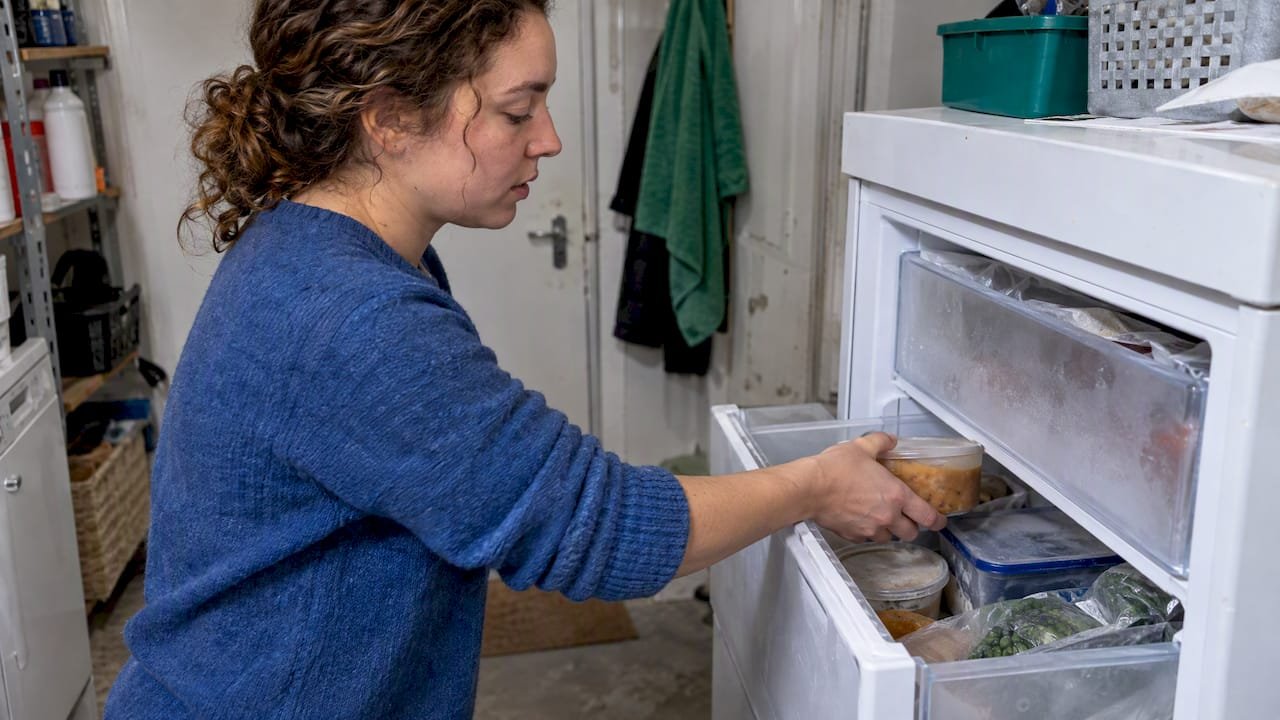
Use your freezer
Freeze extra portions of soup, chili, cooked beans and cooked grains in single-serving containers. Label them with the date. When a sale on meat appears, buy extra and freeze it in meal-size portions. Keep refrigerated leftovers for a short time only, and follow USDA food safety guidance on how long cooked food keeps if you are unsure.
A sample week of budget dinners
This is a template, not a price quote. Costs vary by store and region, so we have not put dollar amounts on individual items. Use your own store’s prices and total the list before you go.
| Day | Dinner | What it reuses |
|---|---|---|
| Sunday | Roast chicken thighs, rice, roasted carrots | Cook extra rice and chicken |
| Monday | Black bean and rice burrito bowls with salsa | Sunday’s rice |
| Tuesday | Chicken and vegetable stir-fry with frozen mixed vegetables | Sunday’s chicken |
| Wednesday | Pasta with canned tomatoes, onion and white beans | Pantry staples |
| Thursday | Fried rice with eggs and frozen peas | Leftover rice |
| Friday | Baked potatoes with chili from the freezer or leftover beans | Freezer or beans |
| Saturday | Clean-out-the-fridge soup or omelets | Whatever is left |
For breakfast, rotate oats, eggs and toast or bananas. For lunch, take the previous night’s dinner or build sandwiches, bean salads or grain bowls. Planned snacks like popcorn, fruit or peanut butter on toast cost far less than grabbing something on the go.
Build the weekly routine
The system works when it fits into a repeating schedule. Here is a simple one.
- Same day each week, 15 minutes: check your kitchen, scan the store ad and write the plan.
- Write the list by aisle so you do not backtrack. Add quantities.
- Shop once. One trip a week cuts unplanned purchases. If you need a fresh item midweek, make it a quick in-and-out trip.
- Prep for 60 to 90 minutes on the day you shop or the day after.
- Review on the last night: what was left over, what spoiled, what did you not eat? Use the answers to adjust next week.
That last step matters. Experts quoted by Mayo Clinic Press say it is normal to overspend or waste some food when you are starting out. They suggest treating these as learning opportunities, then adjusting the list and habits the next week. Consistency matters more than a perfect week.
Our perspective: treat food as the easiest budget line to win
Rent, insurance and car payments are hard to change quickly. Groceries are different. You make dozens of food decisions every week, and each one is a chance to keep a few dollars. That is why we usually tell readers to start their budget cleanup here.

What we see work for beginners is not a dramatic $20-a-week challenge. It is a modest target, a written plan and one habit at a time. Pick a single change this week, such as shopping with a list or cooking one big batch, and add another next week. We say this because the aim is a routine that lasts, and extreme plans rarely do.
We also think the best grocery budget is one that fits into your whole money picture. If you save $40 a week on food, decide where it goes: an emergency fund, a debt payment or a savings goal. Otherwise it quietly disappears into other spending.
— Win Personal Finance
Where to put the money you save
Saving on groceries only helps if the money has a job. A few ways to use it:
- Move the weekly difference into savings automatically. Our savings challenge guide lists seven plans you can start this week, and a grocery saving fits neatly into several of them.
- Add groceries as a clear line in your monthly budget. The smart budgeting habits we recommend cover how to set categories you can stick to.
- If food is not the only budget problem, look at fixed costs too. Our bill negotiation scripts show how U.S. households can lower recurring bills.
Free help from official sources
For more budget-friendly ideas, Nutrition.gov’s nutrition on a budget page collects tips for healthy eating and saving money while shopping. If money is very tight, check whether you qualify for food assistance programs in your state, and ask a local food bank about what is available near you.
Keep going with Win Personal Finance
Meal planning is one habit in a bigger system. If you want to see where the rest of your money goes, start with our financial management plan, a step-by-step guide for turning scattered intentions into a plan. You can also browse our free financial wellness tools for apps that track spending, which makes it easier to see your grocery progress.
FAQ
How much should I spend on groceries per week?
Use the USDA’s Low-Cost plan as a reference point. It is $73.30 a week for a man and $63.80 for a woman aged 20 to 50 in a four-person household, and a single person should add 20%. Your area and dietary needs may change that, so start from your own receipts.
What is the cheapest way to start meal prepping?
Cook one grain and one protein in bulk, then vary the sauce and vegetables through the week. Beans, lentils, rice, eggs and frozen vegetables are the lowest-cost building blocks. You do not need special containers: any lidded dish or reused jar works.
How do I stop wasting food?
Plan meals that share ingredients, freeze extra portions early and use leftovers as ingredients for new meals. The USDA reports that the typical family of four loses about $1,500 a year to uneaten food, so even small improvements add up.
Is it cheaper to buy fresh, frozen or canned?
Often frozen and canned are the cheaper options and waste less. Mayo Clinic Press recommends frozen or low-sodium canned vegetables as budget choices. Compare unit prices on the shelf tag to be sure.
What if I have a medical condition or special diet?
Talk with your doctor or a registered dietitian before changing how you eat, especially if you manage diabetes, kidney disease, food allergies or high blood pressure. Budget ideas like beans and canned goods may need adjusting, for example choosing low-sodium versions.
Sources
- USDA Food Plans: Monthly Cost of Food Reports
- USDA: Food loss and waste, consumers
- USDA Economic Research Service: inflation-adjusted food spending rebounded in 2024
- Mayo Clinic Press: Meal planning on a budget
- HealthyChildren.org: Feeding your family right on a budget
- Allrecipes: 7-day meal plan on $50 in groceries
- Nutrition.gov: Nutrition on a budget




[…] are often the most flexible of the four walls. A weekly system, like the one in our budget meal planning guide, can free up a surprising amount per […]
[…] also says that planning weekly meals and writing a list prevents impulse buys and saves time. Our budget meal planning system walks you through a simple weekly […]