The fastest way to lower your utility bills is to go after the biggest users first: heating and cooling, water heating, and hidden leaks. Start with free changes such as thermostat settings and water heater temperature, add cheap fixes like LED bulbs and weatherstripping, and then look at assistance programs and billing options if the bill is still a squeeze. Below, we rank the moves by cost and payoff so you can pick the ones that fit your home, whether you own or rent.
TL;DR
- Heating and cooling use roughly 40% to 50% of a home’s electricity, so the thermostat and air leaks matter more than any single gadget.
- Free moves come first: water heater at 120°F, shorter showers, cold-water laundry, air-drying, and unplugging idle devices.
- Fixing leaks can trim about 10% from a water bill, and sealing air leaks can cut heating and cooling costs by 10% to 20%.
- Renters have real options, and low-income households may qualify for weatherization help or higher rebates.
- Be wary of anyone who pressures you to sign up fast for a bill-reduction offer.
Table of Contents
- Start by finding out where your money goes
- What uses the most energy in your home
- Free fixes you can do this week
- Low-cost upgrades with a clear payoff
- How to lower your water bill
- How to lower a gas bill, especially in winter
- Smooth out bills with budget billing
- Assistance programs and rebates
- Lowering utility bills as a renter
- Beware of bill-reduction scams
- A quick plan by cost and payoff
- Our perspective
- Track your savings with free tools
- FAQ
- Sources
Start by finding out where your money goes
Before you change anything, read your last three to twelve bills. Look at the usage line (kilowatt-hours for electricity, therms or ccf for gas, gallons or ccf for water), not only the total. Usage tells you whether the problem is how much you use or what you pay per unit.
Then compare months. A winter gas spike is normal. A water bill that jumps in a month when nobody changed habits points to a leak. An electric bill that stays high in spring and fall, when you barely run heat or air conditioning, points to always-on loads or an old water heater.
This is also a good moment to give utilities a line in your budget. If you have not broken your spending into categories, our budget categories list shows where utilities usually fit and how much room to leave for seasonal swings.
What uses the most energy in your home
Heating and cooling systems account for approximately 40% to 50% of a home’s electricity, according to Seattle City Light’s breakdown of home electricity use. The same source says electric water heaters can account for 10% to 15% of a home’s energy use. Together, those two items often make up more than half of the bill.
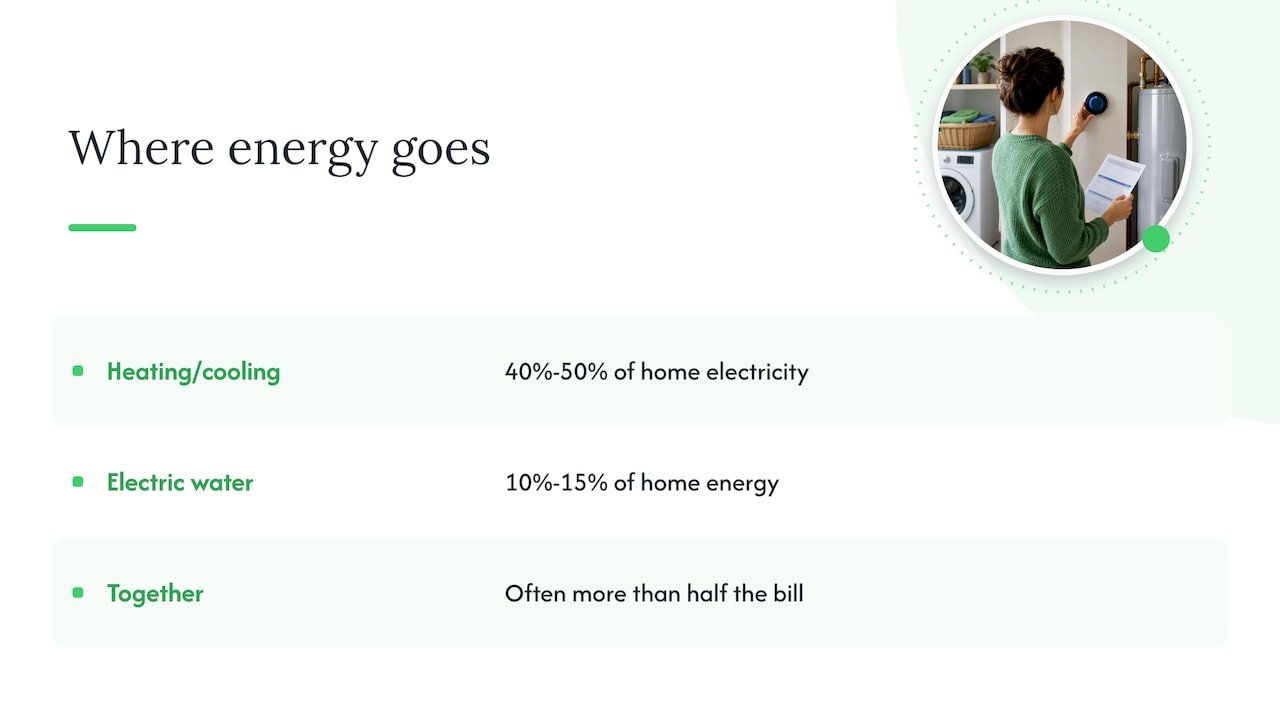
That is useful because it tells you where effort pays off. Switching off a lamp feels virtuous but barely registers. Adjusting how you heat, cool and warm water moves the total.
Your exact split depends on climate, home size and whether you heat with gas, electricity or oil. If you use gas for heat, the same logic applies: the furnace and water heater are the big two, so the fixes below that target them also lower a gas bill.
Free fixes you can do this week
These cost nothing and need no landlord’s permission.
- Turn the water heater down to 120°F. The Department of Energy lists this on its home energy checklist, noting it saves energy and helps avoid scalding. Many tanks ship set higher. Look for the dial on the tank or check your manual. If you rent, ask your landlord before touching it.
- Take shorter showers. Hot water is one of the largest energy uses in a home, so every minute you trim saves both water and the energy to heat it.
- Wash clothes in cold water. Most everyday loads clean fine in cold, and the washer no longer has to heat water.
- Air-dry what you can. Turning off devices when not in use and air-drying clothes are both on the Seattle City Light list of ways to reduce electricity use. A drying rack or a line works even in a small apartment.
- Unplug energy drains. The DOE suggests unplugging items such as cell phone chargers, fans and coffeemakers when they are not in use, per its home energy checklist. A power strip you can switch off makes this a one-click habit.
- Adjust the thermostat when you are asleep or away. A lower heating setting (or a higher cooling one) during those hours cuts the work your system does. If you have a heat pump, use a thermostat designed for heat pumps, because aggressive setbacks can make it run inefficiently.
- Use curtains on purpose. Close them on sunny windows in summer and open them on sunny windows in winter.
Do you want to know whether unplugging is worth it? For chargers and small appliances, it costs you only a few seconds. For a TV setup or a desktop computer with several devices, a switchable power strip is the practical version. It will not transform your bill alone, but it adds up with the rest.
Low-cost upgrades with a clear payoff
These cost a few dollars to a few hundred, and the savings come back within a year or two.
Swap in LED bulbs
ENERGY STAR says replacing your five most-used light fixtures or their bulbs with certified lights can save about $40 a year, according to its low- to no-cost energy tips. Start with the lamps and fixtures that stay on longest: kitchen, living room, porch.
Seal air leaks
Sealing uncontrolled air leaks around walls, ceilings, windows and doors can reduce heating and cooling bills by 10% to 20%, according to the DOE Energy Saver guide. That is one of the largest returns on this list for the cost of caulk, weatherstripping and door sweeps.
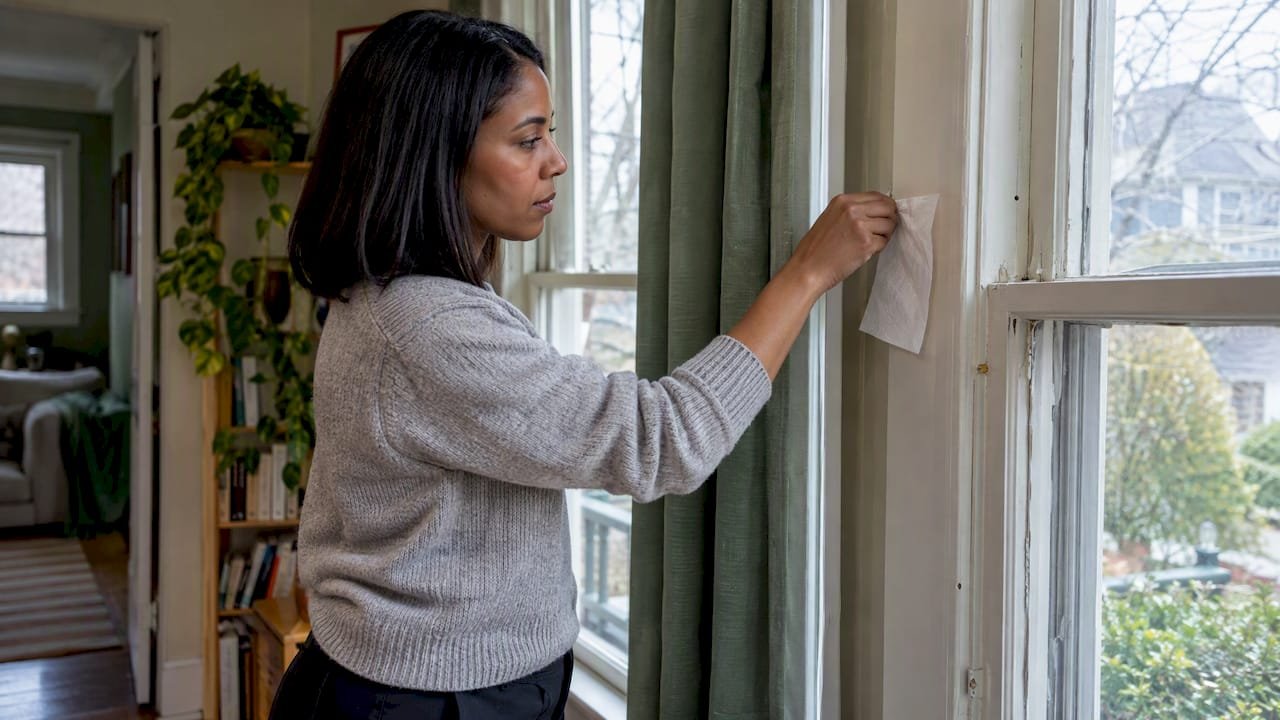
A simple way to find leaks: on a windy day, hold a stick of incense or a tissue near window frames, door edges, electrical outlets on exterior walls and where pipes enter the house. If the smoke wobbles or the tissue flutters, air is moving through.
Renters can still do much of this. Removable window insulation film, draft stoppers at the bottom of doors and temporary rope caulk do not alter the structure.
Install a programmable or smart thermostat
ENERGY STAR reports that a certified smart thermostat can reduce heating and cooling bills by more than 8%, saving about $50 a year on average, in its energy-saving tips. Even a basic programmable model helps if you use the schedule. A thermostat you never program saves nothing.
Schedule maintenance
The DOE advises annual professional maintenance of a furnace or heat pump in its home energy checklist. Replace dirty filters on the schedule your system calls for, because clogged filters make the equipment work harder.
How to lower your water bill
Water bills are the quiet ones, and leaks are the usual culprit. The EPA says easily fixed leaks such as worn toilet flappers, dripping faucets and leaking valves can save homeowners about 10% on their water bills, and that the average household’s leaks can waste more than 9,300 gallons a year. It adds that 9% of homes leak 50 gallons or more per day, all in its Fix a Leak Week materials.
Two checks take about fifteen minutes:
- Meter test. Stop all water use, note the meter reading, wait two hours without using any water, then read it again. If it moved, you have a leak, according to the EPA’s Fix a Leak Week fact sheet.
- Toilet dye test. Put a few drops of food coloring in the tank, wait 15 minutes without flushing, and check the bowl. Color in the bowl means a leaking flapper, per the same fact sheet.
The same EPA fact sheet notes that a faucet dripping once per second can waste more than 3,000 gallons in a year. A new washer or cartridge usually costs a few dollars.
Toilets deserve extra attention because slow leaks hide inside the tank, and some leak at the floor too. If water pools around the base, it can damage the floor underneath, so read about what a toilet leaking at the base can do to a subfloor before it turns into a repair bill far bigger than the water you lost.
Beyond leaks, the habits that count are full loads in the dishwasher and washer, shorter showers, and turning off the tap while brushing. If you water a lawn, most of your summer bill may be outdoors, so check sprinkler timers and heads for leaks.
How to lower a gas bill, especially in winter
Most of a gas bill goes to space heating and water heating, so the same fixes apply, with a few winter-specific points.
- Seal first. Air leaks are what make a furnace run longer. The 10% to 20% range from the DOE’s Energy Saver guide applies to heating as well as cooling.
- Lower the water heater to 120°F, as covered above.
- Service the furnace once a year and change the filter regularly.
- Use a lower setting overnight and while you are out. Wear a sweater and use a blanket before you raise the thermostat.
- Keep vents and radiators clear. Furniture pressed against a register blocks warm air.
- Ask about weather-specific tips from your gas company. Many local utilities publish winter guides and run efficiency programs, which is worth a five-minute call or visit to their site.
If winter bills arrive as shocks, the problem may be timing rather than total. That is where billing options help.
Smooth out bills with budget billing
A budget billing plan spreads your estimated yearly utility costs into equal monthly payments, which helps you avoid seasonal spikes. The FTC suggests reviewing your prior usage, possible extra charges, fees and credits, and reading the plan agreement before you enroll, in its guide on why your credit matters for utility services.
Budget billing does not reduce what you use. It makes the bill predictable, which is handy when you are building a monthly plan. Ask your utility how often it adjusts the amount, because a true-up can still bring a bigger bill later.
If you are behind or expect to be, call before the due date. Late utility payments can hurt your credit history, according to the FTC, and utilities often have payment arrangements for customers who ask early. Our guide to negotiating bills with five scripts shows how to phrase that call.
Assistance programs and rebates
If your income is limited, you may not have to pay for improvements yourself.
- Weatherization Assistance Program. The DOE describes it as helping eligible low-income households reduce energy costs through home energy retrofits, per its FY 2023 budget request. Your state weatherization office handles applications.
- LIHEAP. The same document says DOE will coordinate with HHS and LIHEAP to streamline eligibility for weatherization services, so applying to one may help with the other.
- Home energy rebates. Households taking part in programs like LIHEAP, SNAP or Medicaid are automatically eligible for higher rebate levels under the Inflation Reduction Act’s home electrification programs, according to DOE guidance from October 2023. Rollout and funding vary by state, so check your state energy office for what is open now.
Your utility company may also run its own rebates for thermostats, appliances and insulation. Search its website for “energy efficiency programs” or call customer service.
Lowering utility bills as a renter
You cannot replace windows or insulate an attic, but the list of what you can do is longer than most renters expect. The Seattle City Light page notes that renters may have options even without major upgrades, such as turning off devices and air-drying clothes.
A renter’s short list:
- LED bulbs you can take with you when you move
- Removable window film and door draft stoppers
- A smart or programmable plug-in setup for window units, where allowed
- Cold-water laundry and air-drying
- Reporting leaks and running toilets to your landlord in writing
- Asking the landlord about the water heater setting
If you are planning a move, our moving out budget guide includes room for deposits and utility setup, which you will want to factor in.
Beware of bill-reduction scams
When bills are tight, offers to cut them are tempting, and scammers know it. The FTC says scammers may hide behind offers to cut utility bills to get your money and information, and that they impersonate utility companies, in its winter home fraud alert.
The FTC also says pressure to act fast in door-to-door sales of heating systems, windows and other home-improvement products is a sign of a scam, and advises getting any bill-reduction offer in writing, per its utility services guide.
One more trick: a call saying you overpaid and are owed a refund. The FTC says utilities usually credit overpayments to your account instead of issuing cash refunds, so such calls are probably scams. Hang up and call the number printed on your bill.
A quick plan by cost and payoff
| Move | Cost | Where it helps | Documented figure |
|---|---|---|---|
| Water heater to 120°F | Free | Electric or gas bill | Saves energy, helps avoid scalding |
| Cold-water laundry, air-drying | Free | Electric or gas bill | No figure needed, just habit |
| Meter and toilet leak checks | Free | Water bill | About 10% from fixing leaks |
| LED bulbs in top 5 fixtures | Low | Electric bill | About $40 a year |
| Sealing air leaks | Low | Heating and cooling | 10% to 20% |
| Smart thermostat | Moderate | Heating and cooling | More than 8%, about $50 a year |
| Weatherization or rebates | Often free if eligible | All energy bills | Varies by program |
Work top to bottom. The free items come first, and every dollar you save can go straight to a goal, which is where a savings challenge can keep the habit going.
Our perspective
Most people who want lower bills try the wrong thing first. They buy a gadget or swear off the dryer for a week, then drift back. We think the better approach is to treat utilities like any other category in your budget: measure it, pick two or three changes, and check the next bill to see what moved.
We also think comfort should not be the price of savings. Sealing a draft or fixing a running toilet costs you nothing in comfort. Sitting in a cold apartment to save a few dollars is not a plan you will keep. Go for the quiet wins first, and keep the sacrifices for when you actually need them.
If you are overwhelmed, one bill at a time is enough. Run the meter test this weekend, set the water heater, and call your utility about budget billing. That alone beats an ambitious list you never start. Our approach to smart budgeting habits follows the same idea: small, repeatable actions that stick.
— Win Personal Finance
Track your savings with free tools
Cutting a bill only counts if you can see it. A spreadsheet or app that logs each utility bill by month shows whether your changes are working. Our roundup of free financial wellness tools covers options for tracking spending and building a budget without paying for software, and it is a good next step once you have picked your first three fixes.
FAQ
What wastes the most electricity in a house?
Heating and cooling take the biggest share, roughly 40% to 50% of a home’s electricity according to Seattle City Light. Electric water heaters come next at 10% to 15%. Start with those before worrying about small devices.
Does unplugging devices save electricity?
Yes, for devices that draw power when not in use, such as phone chargers, fans and coffeemakers, as the DOE notes. The savings per device are small, so a switchable power strip for clusters of electronics is the easiest way to make it stick.
How can I lower my utility bill in winter?
Seal drafts, set the water heater to 120°F, lower the thermostat when you are asleep or away, and service your furnace each year. If the seasonal spike is the problem, ask your utility about budget billing to spread costs across the year.
Can I lower utility bills if I rent?
Yes. LED bulbs, removable window film, draft stoppers, cold-water laundry and air-drying all work without permanent changes. Report leaks to your landlord in writing, since fixing them can help the water bill.
Is there help paying utility bills?
Possibly. Low-income households may qualify for the Weatherization Assistance Program, LIHEAP and higher home energy rebate levels, per the DOE. Your utility or state energy office can tell you what is currently available.
Sources
- Home Energy Checklist, Department of Energy
- Low- to No-Cost Tips for Saving Energy at Home, ENERGY STAR
- Energy Saver: Tips on Saving Money and Energy in Your Home, DOE
- What Uses the Most Electricity in Your Home?, Seattle City Light
- Fix a Leak Week, US EPA
- Fix a Leak Week Family Fact Sheet, US EPA
- Getting Utility Services: Why Your Credit Matters, FTC
- Spot and avoid home-related fraud this winter, FTC
- Overpaid your utility bill? That’s probably a scam, FTC
- DOE FY 2023 Budget Request, Vol. 3
- Federal Programs Approved for Categorical Eligibility, DOE