

Yes, you can start a practical side hustle now with our side hustle ideas. The smartest first move is testing a small, skill-based offer for 30 days before committing real money or time. Most beginners can expect modest income at first, often a few hundred dollars in the first month, built on a few hours a week. Growth comes later, once you know an idea has real demand.
TL;DR:
- Most side hustles for beginners generate only a few hundred dollars in the first month, often with minimal hours and low upfront costs.
- Validating demand within 30 days is crucial before investing heavily, using low-cost promotion and direct outreach methods to test interest.
- Tax obligations kick in at net earnings of $400, requiring quarterly payments and detailed recordkeeping of income and expenses.
- Seasonal opportunities like holiday reselling or tax season bookkeeping can provide higher immediate returns if prepared in advance.
- Avoid scams by steering clear of opportunities that require upfront payments or lack verifiable contact details, and focus on skills you already possess.
Table of Contents
- 1. Side Hustle Ideas Grouped by Type and Time Commitment
- 2. How Do You Choose the Right Side Hustle for Your Life?
- 3. Your 30-Day Launch Checklist for Testing a New Hustle
- 4. Seasonal and Niche Windows That Pay Well
- 5. Taxes, Recordkeeping, and Scam Red Flags You Need to Know
- 6. What Does a Real First Month Actually Look Like?
- 7. What I’d Tell a Friend Starting Their First Side Hustle
- Where to Go for Structured Help Managing Side-Hustle Income
- FAQ
- Sources
1. Side Hustle Ideas Grouped by Type and Time Commitment
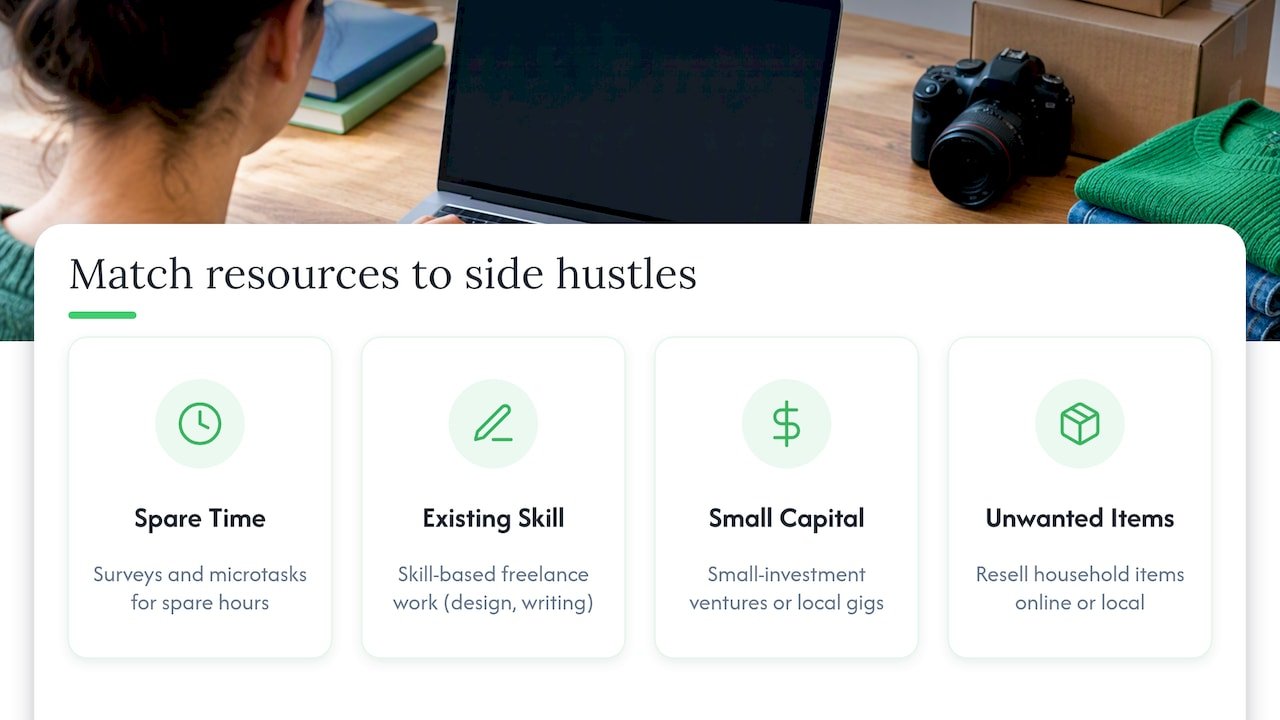
The right side hustle ideas depends less on what’s trending and more on what you already have: time, a skill, a little capital, or a garage full of items you no longer need. We’ve grouped common options below so you can match an idea to your actual situation rather than chasing whatever ranks first in a search.
Remote and online hustles
These side hustle ideas work from a laptop or phone and fit around a full-time job.
- Freelance writing or editing. Best for people comfortable with language and deadlines; typical pay runs $25 to $75 per article for beginners, with experienced writers charging far more. Startup cost is close to zero, and you can land your first client within a week through platforms or direct outreach.
- Virtual assistant work. Suits organized people who like administrative tasks like inbox management, scheduling, or data entry. Entry-level pay often sits between $15 and $30 an hour, and most VAs find clients through referrals or freelance marketplaces.
- Online tutoring. A strong fit if you have subject expertise in math, science, test prep, or a language. Tutors typically charge $20 to $60 an hour depending on subject and grade level, though the Bureau of Labor Statistics notes tutor demand tracks student population and paying ability, and generative AI tools are already changing which tutoring tasks stay in demand.
- Survey and microtask sites. Low skill, low pay, but genuinely free to start. Expect $5 to $15 an hour in practice, useful as a filler activity rather than a primary income source.
- Online reselling. Sourcing clothing, electronics, or collectibles for resale on marketplace apps suits people who enjoy thrifting or have items to clear out. Margins vary widely, but many sellers net $200 to $800 a month once they find a reliable sourcing routine.
Local and service-based hustles
These side hustle ideas lean on physical presence and often pay faster than online work.
- Pet sitting or dog walking: best for animal lovers with a flexible daytime schedule, typically $15 to $25 per visit.
- House cleaning or organizing: strong margins once you have two or three regular clients, often $25 to $50 per job.
- Handyman or small repair services: fits anyone with basic tools and home-repair skill, with jobs commonly priced $40 to $100 per visit.
- Moving or hauling help: physically demanding but pays well by the hour, frequently $20 to $35.
- Local errand running or personal concierge work: suits retirees or anyone with a car and daytime availability.
Creative and digital product hustles
- Selling printables or templates: a one-time creation that can sell repeatedly with no ongoing labor.
- Photography for events or stock libraries: fits anyone with a decent camera and an eye for composition.
- Graphic design for small businesses: logos, social templates, and simple branding work pay well once you build a small portfolio.
- Handmade goods on craft marketplaces: best for makers who already have a hobby that produces sellable output.
- Voiceover or audio editing: a niche fit for people with a clear speaking voice or editing software skills.
Seasonal and opportunity-based hustles
Certain ideas spike at predictable times of year, as detailed later: holiday reselling, summer event staffing, back-to-school tutoring, and tax-season bookkeeping support.
Low-cost entry hustles
If capital is tight, these side hustle ideas need almost nothing to start: surveys, microtasks, dog walking, errand running, and reselling items you already own. Most can begin the same day with no more than a phone and an account setup.
Skill-upgrade, higher-earning hustles
Once you have some experience, these side hustle ideas pay more but take longer to ramp up.
- Freelance consulting in your professional field. Draws on skills you already use at your day job, often commanding $50 to $150 an hour.
- Web design or development for small businesses. A single client project can run $500 to $3,000, though it requires a learning curve if you’re starting from zero. For anyone weighing a do-it-yourself build against hiring it out, Macrolight Builder’s comparison of DIY versus done-for-you websites walks through the tradeoffs.
- Bookkeeping or tax-prep support for small businesses. Pays well, especially seasonally, and benefits from basic accounting knowledge.
- Niche e-commerce with a curated product line. Takes longer to build margin but scales further than simple reselling, since repeat customers and branding compound over time.
Reporting on 2026 side-gig trends points to a pattern worth noting: Forbes highlights the rise of “side stacking,” where people run several income-generating side projects at once rather than relying on a single hustle. That’s worth keeping in mind as you build your shortlist: you don’t have to pick just one.
For a broader list of specific platforms to source clients or sell on, our guide to 10 websites to make money online breaks down where each idea above tends to find buyers.
2. How Do You Choose the Right Side Hustle Ideas for Your Life?
Looking at side hustle ideas is less about finding the “best” one and more about matching an idea to your actual constraints. Start with four questions.
- What’s your goal? Fast cash for a near-term expense favors low-barrier ideas like reselling or microtasks; building long-term income favors skill-based work like tutoring or freelance services.
- How many hours do you realistically have per week? Five hours suits a low-maintenance hustle like surveys or occasional gigs; fifteen or more opens the door to client-based work that needs consistent availability.
- How much startup cost can you tolerate? Zero-cost ideas (tutoring with skills you already have, freelance writing, errand running) remove financial risk; inventory-based ideas (reselling, craft goods) need upfront cash you might not recoup immediately.
- What skills do you already have? The highest-paying hustles usually come from skills you’ve already built professionally, not from learning something entirely new from scratch.
Once you’ve narrowed to one or two ideas, validate demand before investing further. A few low-cost ways to test:
- Offer a pre-sale or discounted “founding client” rate to a handful of people in your network.
- Post a single listing on a marketplace or local group and see how many inquiries come in within a week.
- Build a one-page offer description and share it with a small paid promotion to gauge click interest.
- Ask directly: message five people who fit your target client and ask if they’d pay for the service.
Watch for warning signs as you research opportunities, especially “business opportunity” programs that promise easy income. The FTC’s guidance on work-from-home job scams flags requests for upfront fees, vague payment structures, and pressure to act immediately as common red flags. Any opportunity that asks you to pay before you start earning deserves extra scrutiny.
Pro Tip: If an idea requires you to recruit other people underneath you to earn money, that’s a structural warning sign, not a side hustle.
3. Your 30-Day Launch Checklist for Testing New Side Hustle Ideas
A 30-day test keeps your financial exposure low while giving you enough data to decide whether an idea deserves more time. Here’s how to structure it.
- Days 1 to 3: Define your minimum offer. Decide exactly what you’re selling, who it’s for, and what you’ll charge. Keep the scope narrow: one service, one price, one clear outcome.
- Days 4 to 7: Set up your presence. Create a profile, marketplace listing, or a simple one-page offer with a short pitch of one or two sentences that states what you do and who it helps.
- Days 8 to 14: Start promoting in low-cost channels. Share in relevant social groups, local community boards, or your existing network. Track every inquiry you receive, even the ones that don’t convert.
- Days 15 to 21: Deliver your first paid work. Treat your first one or two clients as a feedback loop: note what took longer than expected, what they asked for that you hadn’t planned on, and how they found you.
- Days 22 to 28: Measure your numbers. Count total inquiries, paid orders, and your conversion rate from inquiry to sale. This single ratio tells you more about viability than revenue alone.
- Day 29 to 30: Make the call. Scale if you have repeat interest and a workable process, iterate if interest exists but something about the offer needs adjusting, or stop if demand simply isn’t there.
Practical guidance on testing new side hustle ideas consistently points to this same window: validating demand within 30 days or less limits your financial exposure and keeps burnout risk low before you invest more heavily. If the numbers at day 30 look promising, that’s the point to invest in better tools, raise your prices, or start seeking referrals.
4. Seasonal and Niche Windows That Pay Well
Some of the best returns come from timing rather than the idea itself. A handful of seasonal windows consistently create short bursts of demand.
- Summer: event staffing, outdoor tutoring or camps, and seasonal retail or hospitality gigs pick up as schedules open.
- Back-to-school season: tutoring and test-prep demand climbs in late summer and early fall as parents plan ahead.
- Holiday season: reselling gift items, gift-wrapping services, and seasonal craft sales spike from November through December.
- Tax season: bookkeeping and tax-prep support for small businesses and freelancers sees a reliable surge from January through April.
Capturing these windows takes preparation before the rush. Build inventory or finalize your service offering at least a few weeks ahead, give yourself enough marketing lead time to book clients before the peak, and bundle services or products where it makes sense, such as pairing gift wrapping with a reselling side hustle during the holidays.
The real payoff comes from converting a seasonal spike into something ongoing. A tax-season bookkeeping client might need quarterly support, and a holiday reselling customer might become a repeat buyer if you follow up after the season ends.
5. Taxes, Recordkeeping, and Scam Red Flags You Need to Know
Side hustle ideas are still income, and the IRS treats it that way regardless of how small the amount feels. If your net self-employment earnings reach $400 or more, you’re required to pay self-employment tax and typically need to file Schedule C and Schedule SE alongside your regular Form 1040. That threshold catches most side hustlers faster than people expect.
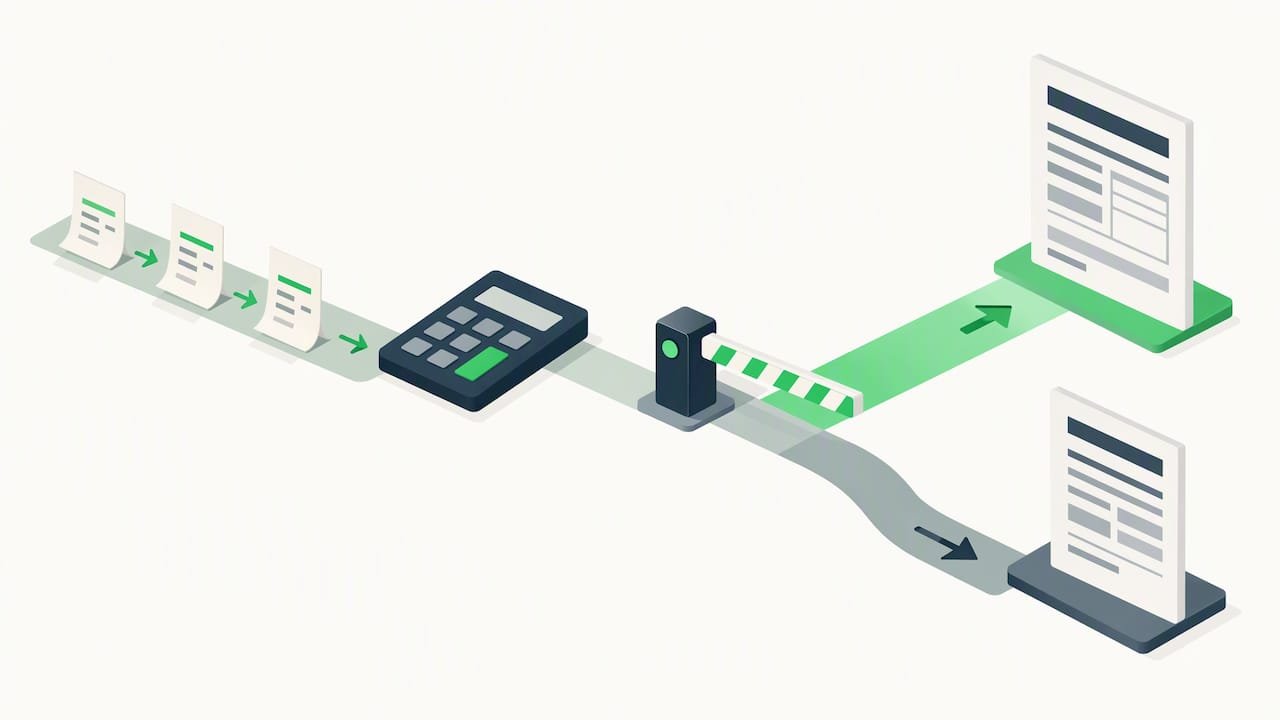
Beyond the annual filing, the IRS expects quarterly estimated payments if you expect to owe tax on your side income. Those payments are generally due April 15, June 15, September 15, and January 15, and missing them can mean a penalty even if you pay everything owed by the annual deadline. A common rule of thumb is to set aside roughly a quarter to a third of your gross side-gig earnings in a separate account so you’re not caught short when a payment comes due.
Good recordkeeping makes all of this far less stressful:
- Keep a dedicated bank account or simple ledger for side-hustle income and expenses.
- Track mileage any time you use a vehicle for the work.
- Save every receipt and invoice in one folder, physical or digital.
- Reconcile your records monthly rather than scrambling at tax time.
Scams are the other side of this coin, and they’re increasingly common in gig and side-hustle spaces. The FTC’s consumer guidance on work-from-home scams warns against paying for the promise of a job, interacting with recruiters who reach out unsolicited, and any opportunity that’s vague about how or when you’ll actually get paid. If something asks for payment upfront, uses only unverifiable contact methods, or resembles a game-like task app promising easy money, treat it as a red flag rather than an opportunity.
For help putting side-hustle income into a broader budget, our guide to smart budgeting habits that actually work covers how to allocate new income toward savings, debt, or taxes without it disappearing into daily spending.
6. What Does a Real First Month Actually Look Like?
Numbers from a first month for side hustle ideas rarely match the glossy promises you’ll see online. Here’s what a realistic ramp-up tends to look like across a few common hustles.
- Tutoring: roughly 6 to 8 hours a week teaching two subjects led to around $400 in first-month revenue, with most of the early time spent finding the first two clients rather than teaching.
- Reselling: an initial $150 investment in thrifted clothing returned close to $280 after fees and shipping, a margin that improved once sourcing got faster.
- Freelance writing: the first client came from a direct cold pitch rather than a marketplace, landing one $150 project in the first three weeks before referrals started bringing in more consistent work.
7. What I’d Tell a Friend Starting Their First Side Hustle
If you’re picking a first hustle, start with tutoring, freelance writing, or local service work like pet sitting. All three need almost no upfront money, lean on skills most people already have, and give you fast feedback on whether anyone will actually pay you.
The biggest mistake isn’t picking the wrong idea. It’s spending weeks perfecting a website or business card before testing whether anyone wants what you’re offering. Get one paying client first, then build the polish around what’s already working.
The second-biggest mistake is treating your side income like it’s separate from your real finances. It isn’t. Every dollar you earn affects your taxes, your savings rate, and your goals, so track it from day one instead of figuring it out later.
— Win Personal Finance
Where to Go for Structured Help Managing Side-Hustle Income
Once your side hustle ideas start generating real money, the next challenge is keeping track of it without it slipping into your regular spending. We built Win Personal Finance around straightforward guides and free tools that help you manage exactly that kind of transition, without wading through jargon or unrealistic strategies.

A few places to start:
- Our best free financial wellness tools roundup covers no-cost apps for tracking side-hustle income and expenses side by side with your main budget.
- Our guide to smart budgeting habits that actually work walks through allocating new income toward savings or debt instead of letting it blend into everyday spending.
- Our blog covers ongoing income strategies if you want to keep building beyond your first hustle.
Whichever page you start with, the goal is the same: give your new income a plan before it arrives, so it actually moves your finances forward.
This article is general information, not a substitute for advice from a qualified financial advisor. Consult a qualified financial professional about your own circumstances before acting on anything here.
FAQ
What are realistic side hustles?
Realistic side hustles are ones that match your actual time, skills, and available capital, such as tutoring, freelance writing, pet sitting, or reselling items you already own. Most beginners earn modest amounts in the first month, often in the low hundreds of dollars, before income grows as they build clients or refine pricing. The most realistic path is testing a small offer for 30 days before expecting significant income.
How do you make $100 a day from a side hustle?
Reaching $100 a day usually requires either a higher hourly rate, like consulting or specialized tutoring at $50 an hour worked across two hours, or volume-based work like reselling or multiple small freelance tasks. It typically takes weeks or months to build the client base or systems needed to hit that figure consistently, rather than happening in the first week. Combining two smaller income streams, a practice Forbes describes as “side stacking”, is one common way people reach that level.
Do I have to report side hustle income on my taxes?
Yes, any net self-employment earnings of $400 or more require you to pay self-employment tax and generally file Schedule C and Schedule SE with your regular tax return. You may also need to make quarterly estimated payments throughout the year rather than paying everything at once in April.
How can I tell if a side hustle opportunity is a scam?
Watch for any opportunity that asks you to pay upfront fees, uses unverifiable contact methods, or resembles a game-like task app promising unusually easy income. The FTC’s guidance on work-from-home job scams recommends never paying for the promise of a job and researching any opportunity thoroughly before sharing personal or financial information.
How much money should I set aside for taxes from side income?
A common guideline is setting aside roughly a quarter to a third of your gross side-gig earnings to cover federal income and self-employment tax obligations. The exact amount depends on your total income and tax bracket, so adjusting your savings rate after your first quarterly estimate is worth doing.
Sources
- Manage taxes for your gig work — Internal Revenue Service
- How to avoid work-from-home job scams — FTC
- 5 top-earning side gigs of 2026 that can replace a second salary — Forbes
- Tutors — Occupational Outlook Handbook — U.S. Bureau of Labor Statistics




[…] side hustle ideas and 30-day plan for structuring your first month of […]