You can reduce your grocery bill by doing three things well: setting a number for what you spend, planning meals around what you already own, and buying smarter at the shelf. The 21 ideas below are ranked by how easy they are to start, and each one is something you can try on your very next trip.
Food is one of the few budget categories you control week by week, which makes it a good place to find money fast. You do not need extreme couponing or a spreadsheet. You need a few repeatable habits.
TL;DR
- Work out what you spend on food now, then set a weekly or monthly limit based on household size.
- Plan meals, check your pantry and shop from a list. This is the biggest single habit for cutting impulse spending.
- Compare unit prices, buy store brands and use frozen or canned produce when fresh costs more.
- Waste less: use older items first, freeze leftovers and store produce properly.
- If your budget is still tight, add a small income stream earmarked for food.
Table of Contents
- Start with your numbers
- Plan before you shop
- Shop smarter at the shelf
- Fill the cart with cheap, filling foods
- Stop throwing money away
- Raise the other side of the equation
- Our perspective on grocery savings
- Put your savings to work
- A simple way to start this week
- FAQ
- Sources
Start with your numbers
Before you change what you buy, you need to know what you spend. These first three ideas give you a baseline and a target.
1. Add up one week of food spending
Track everything food-related for a week: groceries, nonperishables, cooking supplies and dining out. The American Heart Association’s grocery guide suggests subtracting any food assistance you receive and multiplying the weekly total by four to estimate a monthly food budget. Family size and the ages of the people in your household change the answer, so do not compare yourself to a stranger’s number.

2. Check a benchmark for your household
The USDA publishes Food Plans that show average monthly costs for meals eaten at home by household size. They come in four spending levels: Thrifty, Low-Cost, Moderate-Cost and Liberal, as explained in this Michigan State University food budgeting guide. If you are well above the Moderate level and not feeding teenagers or athletes, you have room to trim.
3. Put grocery dates on a calendar
The same Michigan State guide recommends a calendar that tracks paydays, shopping days, spending limits, food assistance arrivals and store sales or coupons. When shopping day lands a few days after payday, you avoid the mid-month scramble that leads to expensive convenience buys. For help placing food in your overall plan, see our list of budget categories.
Plan before you shop
Most overspending happens before you enter the store. Planning is where the largest savings sit.
4. Plan a week of dinners
Meal planning means you buy only what the week’s recipes need. Michigan State’s meal planning guidance notes that a plan based on what you already have removes guesswork. Clemson’s extension service also says that planning weekly meals and writing a list prevents impulse buys and saves time. Our budget meal planning system walks you through a simple weekly version.
5. Shop your pantry, fridge and freezer first
Take inventory each week so your list includes only what the household needs. The American Heart Association weekly meal plan guide suggests treating the pantry, refrigerator and freezer as an inventory and using older items first. That alone stops you from buying a third jar of something you already own.
6. Build a list in the order of the store
Write your list by section: produce, dairy, meat, dry goods, frozen. You walk a straight path, skip aisles you do not need and see fewer tempting displays. Stores and manufacturers use marketing research to encourage you to buy more, as the University of Minnesota’s Real Life, Good Food program points out, so a list is your defense.
7. Plan one “use it up” meal
Pick one dinner each week built from leftovers and aging ingredients: fried rice, soup, a frittata, a grain bowl. It turns almost-wasted food into a free meal.
8. Repeat a few cheap, reliable meals
A rotation of five or six dinners you like keeps the list short and the prices predictable. You can swap the vegetable or protein by season without starting over.
9. Never shop hungry
Eat first, or shop after a meal. It sounds too simple to matter, but hungry shoppers fill the cart with ready-to-eat snacks. Pair this with a list and you remove most of the temptation.
Shop smarter at the shelf
You have your plan. These ideas lower the price you pay for the items on it.
10. Compare unit prices, not sticker prices
The Mayo Clinic Press recommends comparing products by unit price, which usually appears on the shelf tag, rather than relying on the total price. A bigger box is not always cheaper per ounce, and a smaller package of a store brand can beat both.
11. Choose store brands
The same Mayo Clinic guidance lists store brands among the easiest ways to cut costs. Start with staples like flour, canned tomatoes, beans, frozen vegetables and oats, where the product is nearly identical. Keep name brands only for the few items where you truly notice a difference.
12. Buy seasonal produce
Produce in season is usually cheaper and tastes better. Build your plan around whatever is abundant: apples and squash in the fall, berries and tomatoes in summer. When fresh is pricey, move to the next idea.
13. Use frozen and canned vegetables
Frozen or low-sodium canned vegetables can be low-cost alternatives to fresh, according to Mayo Clinic Press. They keep for months, so you throw away less. Rinse canned beans and vegetables if you want to reduce sodium.
14. Buy basic foods, not prepared ones
The same guidance notes that basic foods cost less than pre-cut or prepared versions. A whole block of cheese, a head of lettuce and dry oatmeal take a couple of extra minutes and often cost noticeably less per serving. Start with the three prepared items you buy most and replace one this week.
15. Use coupons and loyalty programs on items you already buy
Mayo Clinic Press also suggests loyalty programs and coupons, after you check the nutrition facts. The rule that keeps coupons honest: only use them on products already on your list. A discount on something you did not need is still spending.
16. Buy in bulk only when you can use it
Bulk buying saves money if you can store the food and eat it before it spoils, per Mayo Clinic Press. Rice, dried beans, oats and frozen chicken are good candidates. Bulk fresh produce or a giant jar of a sauce you eat twice a month usually is not.
Fill the cart with cheap, filling foods
A cheap grocery list does not have to be boring. These ideas shift the center of your plate toward the foods that stretch furthest.
17. Make beans, lentils and whole grains the base
The American Heart Association grocery guide lists whole grains, beans, lentils and chickpeas as affordable choices and suggests making lentils or chickpeas the main ingredient of a meal. Think lentil soup, chickpea curry, bean burritos or rice and black beans with a fried egg.
A sample cheap grocery list built on this idea:
| Category | Staples to keep stocked |
|---|---|
| Grains | Oats, brown rice, pasta, tortillas |
| Legumes | Dried or canned beans, lentils, chickpeas |
| Produce | Seasonal fruit, cabbage, carrots, onions, frozen vegetables |
| Protein | Eggs, frozen chicken, canned tuna or beans |
| Flavor | Garlic, canned tomatoes, spices, vinegar |
18. Treat meat as a side or a flavoring
Use a smaller portion of meat in stews, stir-fries and pasta, and fill the rest with vegetables and legumes. You will notice the savings on the receipt first, and your meals stay filling.
Stop throwing money away
Wasted food is money you already spent. Two ideas close that leak.
19. Store food so it lasts
The American Heart Association guide recommends refrigerating produce properly and buying only what you can consume in a week of fresh food. It also advises repurposing leftovers into new meals. Freeze bread, cooked grains and soup in single portions so you always have a quick meal.
20. Read date labels correctly
A “Best if Used By” date marks peak flavor or quality, not safety, and properly handled, stored food can last longer, according to the same guide. Use your eyes and nose, and follow safe storage rules. Do not toss a whole carton because the date arrived yesterday.
Raise the other side of the equation
21. Earn a little on the side and assign it to food
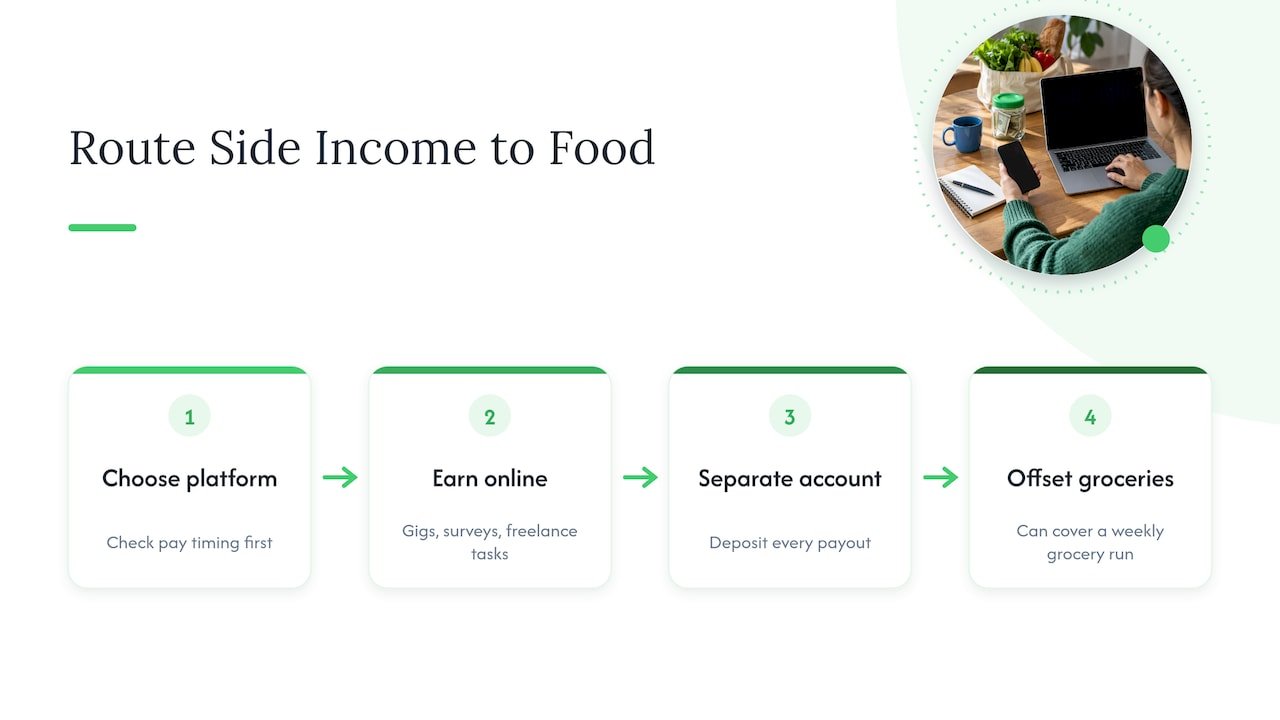
When you have trimmed what you can and the budget is still tight, the other lever is income. Some of the best money making websites let you take on small online gigs, surveys, freelance tasks or digital sales, and even a modest side income can cover a weekly grocery run. The trick is to route it somewhere specific: deposit every payout into a separate food account so it directly offsets your grocery spending.
Start with our side hustle ideas and 30 day plan and our guide to passive income ideas for beginners. Choose a site or platform where you can see how and when you are paid before you invest time.
Our perspective on grocery savings
We believe that grocery savings work best when they are simple enough to repeat every week. In our experience, people do not fail at budgeting because they lack willpower. They fail because the plan is too complicated, so we focus on clear steps you can follow as a beginner.
Our approach is to pick two or three habits, such as a weekly meal plan and a pantry check, and make them automatic before adding more. Food is the most flexible part of most budgets, so small wins here free up money for debt payments, savings and the goals you care about.
That is why we pair spending habits with income ideas and free tools. Cutting costs and earning more work together, and the combination builds lasting stability.
Win Personal Finance
Put your savings to work
Saving $40 or $60 on groceries only matters if it goes somewhere. Our guide to free financial wellness tools can help you track the savings, set goals and see your progress in one place.

If you want a full plan around the money you free up, read our financial management plan for a step-by-step way to direct it. You can also use a savings challenge to turn your grocery savings into a fund.
A simple way to start this week
You do not need to do all 21 at once. Try this order:
- Track one week of food spending (idea 1).
- Plan five dinners and check your pantry (ideas 4 and 5).
- Write a list and stick to it (ideas 6 and 9).
- Compare unit prices on three items you buy every week (idea 10).
- Review the receipt and note where the money went.
After two or three weeks, add store brands, frozen vegetables and one bean-based meal. If you tend to overspend on impulse, our piece on the psychology of spending explains why and what to do about it. The wider habits that keep this going are in our guide to smart budgeting habits.
FAQ
How much should I spend on groceries each month?
It depends on household size and ages. Track a week of food spending, multiply by four, and compare it to the USDA Food Plan levels, which range from Thrifty to Liberal. Set your target at a level you can sustain, then lower it gradually.
What is the fastest way to cut my grocery bill?
Plan meals, check your pantry, and shop from a list. Planning stops duplicate purchases and impulse buys, and it requires no special tools. Add unit-price comparisons and store brands for further savings.
Is buying in bulk always cheaper?
No. Bulk buying saves money only when you can store the food and use it before it goes bad. Stick to staples like rice, oats, dried beans and freezer-friendly proteins, and compare the unit price to make sure the larger size really costs less.
Are frozen and canned vegetables worth buying?
Yes, they can be low-cost alternatives to fresh vegetables, according to Mayo Clinic Press. They last longer, which reduces waste. Choose low-sodium canned options when you can.
Sources
- American Heart Association: Grocery Guide
- American Heart Association: Weekly Meal Plan Made Easy
- Michigan State University: Create a Food Budget
- Michigan State University: Plan Meals
- Clemson Cooperative Extension: Stretch Your Food Dollars, Part 2
- Mayo Clinic Press: Meal planning on a budget
- University of Minnesota: Before you shop